
Before You Light Your Torch
Lampworking is amazing, but it’s also real fire, real fuel, and molten glass.
This checklist is a beginner-friendly safety guide to help you set up your torch area in a way that protects your eyes, lungs, and workspace so you can keep creating long term.
Bookmark this page and review it before each session,
especially while you’re still building your routine.
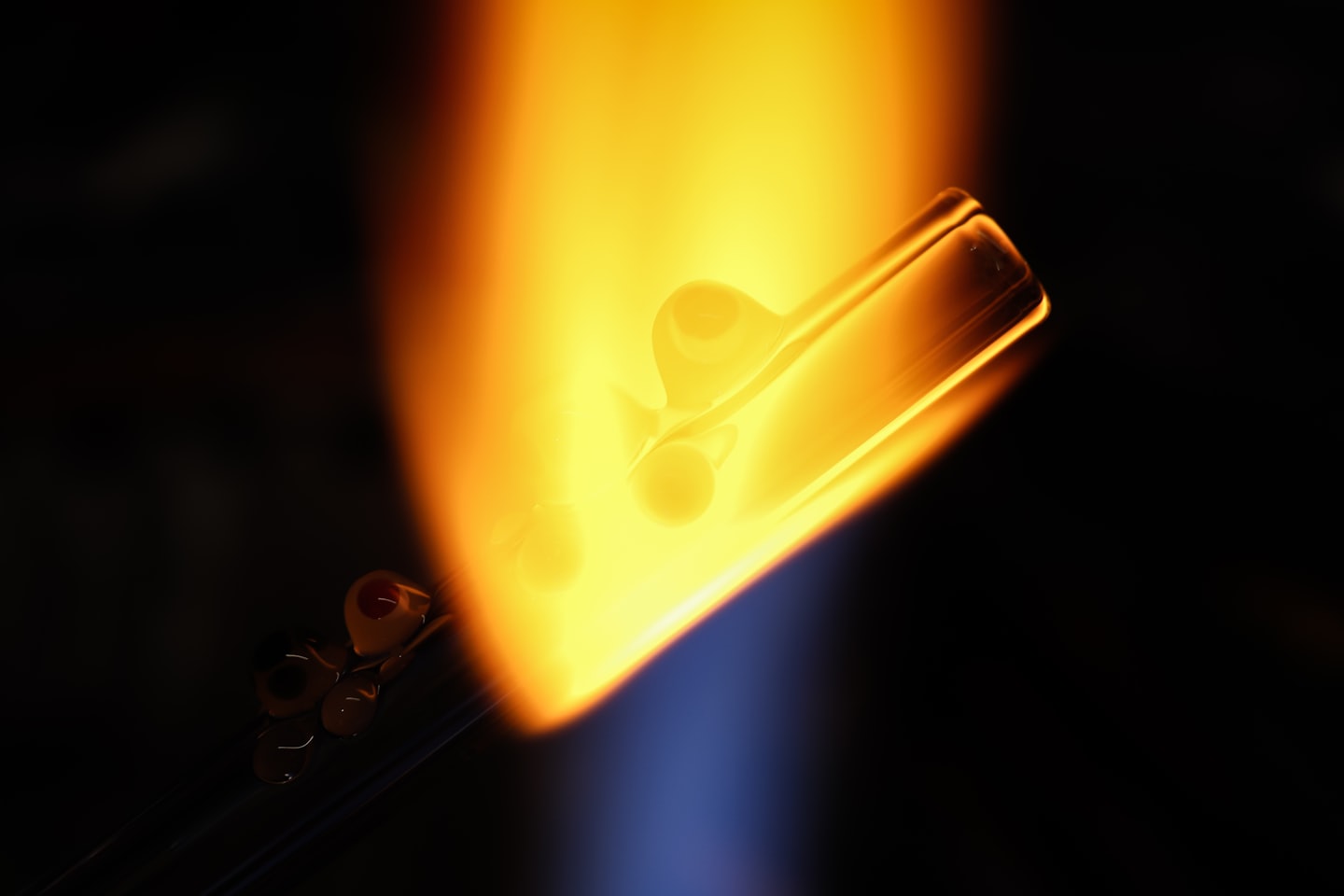
1. Ventilation Comes First
Lampworking creates combustion gases and microscopic glass and metal particles. Even if you can’t see or smell them, they can build up in your workspace over time. Proper airflow protects your lungs, reduces headaches and fatigue, and helps keep your flame stable and predictable.
Ventilation is not just about comfort. It is about long term health and safe torch operation.

Good Ventilation Removes
- Combustion fumes
- Microscopic glass particles
- Heat buildup around your work area
If you plan to lampwork regularly, ventilation is not optional. It is part of basic studio safety.
Important Safety Notes
Do not point fans directly at your flame. This can cause unstable flame behavior and unsafe torch conditions.
Do not work in sealed rooms or basements without active ventilation systems.
If you feel dizzy, nauseous, or get headaches while working, stop immediately and increase airflow.

Minimum Safe Setup (Beginner Level)
If you are just starting and do not have a dedicated ventilation system yet, you should have:
- Open a window near your torch
- Fan pulling air OUT of room (not blowing at flame)
- Fresh air source entering room from opposite side
Avoid pointing a fan directly at your torch flame. This can destabilize your flame and affect your glass control.

Long-Term Setup
(Advanced Level)
For regular lampworking, most artists upgrade to:
- Inline exhaust fan system
- Vent hood positioned behind or above torch
- Ducting that vents air fully outside
- Dedicated airflow direction (clean air in, dirty air out)
This improves safety and also makes working sessions more comfortable and consistent.Understand the correct methods to manage materials and tools to prevent accidents.
2. Eye Protection (Didymium / ACE Glasses)
Lampworking flames produce something called sodium flare, which is an intense yellow light created when sodium in glass is heated. This flare can make it difficult to see your molten glass clearly and can strain your eyes over time.
Even if you feel fine during short sessions, repeated exposure without protection can contribute to long term eye fatigue and potential damage.
Your glasses should:
✔ Cover from multiple angles (not tiny fashion frames)
✔ Sit securely without sliding
✔ Be comfortable enough for long sessions
Side protection helps reduce stray light exposure.
Proper Lampwork Glasses Help You
See glass detail more clearly
- See glass detail more clearly
- Reduce eye strain
- Protect your vision during long sessions
Important Safety Notes
Regular sunglasses are NOT safe for lampworking.
They do not filter sodium flare or protect against torch brightness.
If your eyes feel strained or you see spots after working, stop and re-evaluate your eye protection.
Didymium Glasses (Most Beginners Start Here)
Didymium lenses filter sodium flare so you can see glass color and detail while working. These are commonly used for soft glass lampworking and beginner torch setups.
Good for:
- Soft glass (like Moretti / Effetre)
- Bead making
- Lower heat torch setups
ACE or Shade-Enhanced Glasses (Higher Heat / Boro Work)
ACE or shade-enhanced lenses provide additional protection for higher temperature work and brighter flame environments.
Often used for:
- Borosilicate glass
- Hotter torches
- Long, frequent work sessions
3. Fire-Safe Work Zone
Lampworking involves open flame, high heat, and molten glass that can stay dangerously hot long after it looks cool. A properly prepared workspace reduces fire risk and helps you work confidently and consistently.
Most studio accidents happen because of clutter, flammable materials, or unstable torch placement, not because of the torch itself.
A clean, fire-safe zone lets you focus on your glass instead of worrying about what might catch fire nearby.
A. Safe Work Surface
Your torch should be mounted on or above a surface that will not ignite or melt under heat exposure.
Safer options include:
• Metal work surfaces
• Tile or stone surfaces
• Cement board or heat-safe bench coverings
Avoid:
• Plastic tables
• Fabric-covered surfaces
• Paper or cardboard work areas
B. Clear the Flame Zone
Your immediate torch area should be free of anything that can ignite or melt.
Keep away from your torch:
• Paper towels
• Alcohol wipes
• Yarn, thread, or fabric scraps
• Packaging materials
• Loose craft supplies
Think of this area like a small welding station, not a craft table.
C. Personal Safety in the Work Zone
Before lighting your torch:
✔ Tie back long hair
✔ Avoid loose sleeves or scarves
✔ Remove dangling jewelry
✔ Keep skin covered if possible
Natural fibers (cotton, denim) are safer than synthetic fabrics, which can melt.
D. Emergency Safety Items (Keep Within Reach)
Every lampwork station should have:
✔ Fire extinguisher rated for home or workshop use
✔ Fire blanket
✔ Clear path to exit
You should be able to reach safety equipment without crossing over your torch.
5. Torch & Fuel Safety Check.
Torch + Fuel Safety Check
If you are using a handheld or disposable-fuel torch, check your torch before each session.
Look for:
• Cracked torch head
• Loose fuel canister connection
• Irregular or sputtering flame
• Fuel smell when torch is OFF
Never store torches or fuel canisters near heat sources or direct sunlight.
Replace damaged torches immediately instead of trying to repair them.
Safety & Medical Disclaimer
The information on this page is for general safety awareness only and is not medical, professional, or emergency guidance. If an injury occurs, seek appropriate medical attention or emergency services. Always follow manufacturer instructions and local safety regulations when working with tools, fuel, or heat sources.
Products I Use
EYE PROTECTION

Designed to help reduce sodium flare and improve visibility while working with hot glass. Commonly used by beginner and hobby lampworkers working with soft glass.
VENTILLATION
Helps move air out of small work areas and is often used in beginner or temporary ventilation setups where full exhaust systems are not yet installed. Useful for improving airflow in small craft rooms or workstations.
FIRE SAFETY
Helps protect work surfaces from heat exposure and is commonly used under torch work areas, soldering setups, or hot tool stations. Useful for small craft tables or studio benches where added heat protection is needed.